Zakopane all year round: what to do in each season
Zakopane in July and Zakopane in November are two different towns. Here is what makes sense in each of the four seasons — and why it is easier to see it from a base a quarter of an hour away.
The Rezydencja Kojsówka team · · 9 min read
In brief
- From Witów to Zakopane takes a little over a quarter of an hour, depending on traffic.
- Spring means crocuses in the Chochołowska Valley, usually at the turn of March and April, and the smallest crowd in town.
- Summer means all the valleys and trails open, but also the peak of the crowds and the parking problem.
- Autumn gives the best visibility and the lowest room rates. It is the most underrated season.
- In winter Witów Ski runs right next door, and Zakopane is better visited in the evening than at peak hours.
Zakopane has a reputation as a place you either love or avoid entirely. The truth is that it all depends on when you go: the same town on a Saturday in August and on a Tuesday in November are two completely different experiences.
Over the years we have watched guests plan trips into Zakopane from Witów, and seen what works and what ends in two hours of traffic. Below is the year divided into four parts, with specifics for each.
Logistics first: a quarter of an hour and a decision
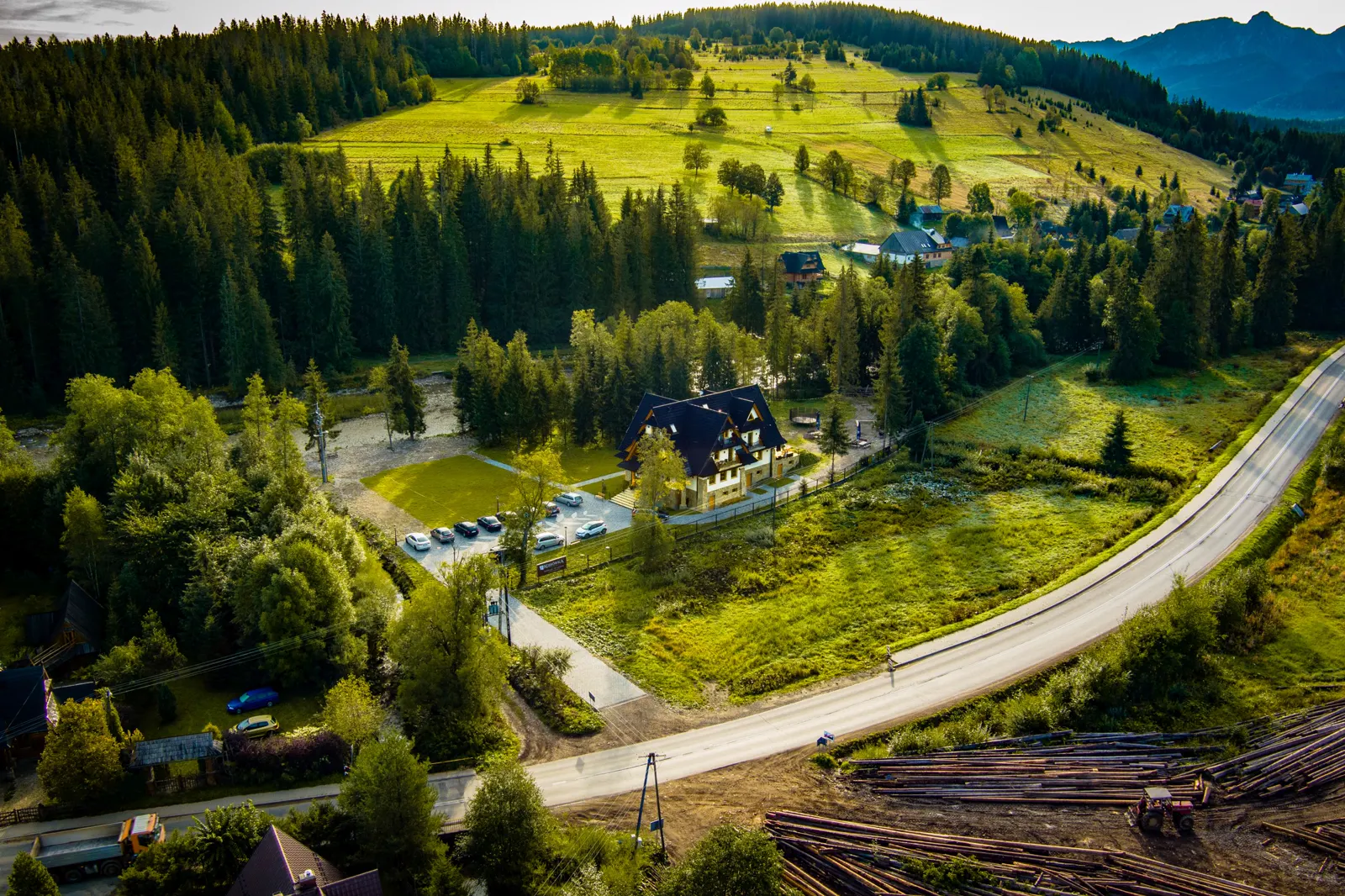
From Witów to Zakopane is a little over a quarter of an hour, depending on traffic. Close enough to drop in for an afternoon, and far enough that in the evening you come back to quiet rather than listening to Krupówki through the window.
Timing is everything. At the height of the season, driving into town between ten and one is the worst possible choice, as is coming back on a Sunday afternoon. Early in the morning or after five, the whole thing looks quite different.
Spring: crocuses and empty trails
March and April are when Podhale wakes up faster than the tourism does. The big draw is the crocuses in the Chochołowska Valley, usually blooming at the turn of March and April. The timing depends on the weather and can shift by as much as a fortnight.
In Zakopane itself this is the best time for the museums, a walk along Krupówki without pushing through, and the ride up Gubałówka without a queue. The higher Tatras are still under winter conditions and need equipment, so the mountains mean valleys and ridges then.
A practical note: during the crocus season the car park at Siwa Polana fills extremely early. Staying in Witów means you set off before the wave of visitors.
Summer: everything open, people everywhere
July and August are the full range of possibilities: every trail open, the huts running, the cable cars operating. It is also when Zakopane takes the heaviest traffic of the year, and when Morskie Oko and Kasprowy Wierch need planning in advance.
- The Western Tatra valleys (the Chochołowska and the Kościeliska) start near Witów and are far less busy than Morskie Oko.
- For the Kasprowy Wierch cable car it is worth booking ahead; in season the tickets go quickly.
- For Morskie Oko you drive to Palenica Białczańska and walk on along a tarmac road — about two hours each way.
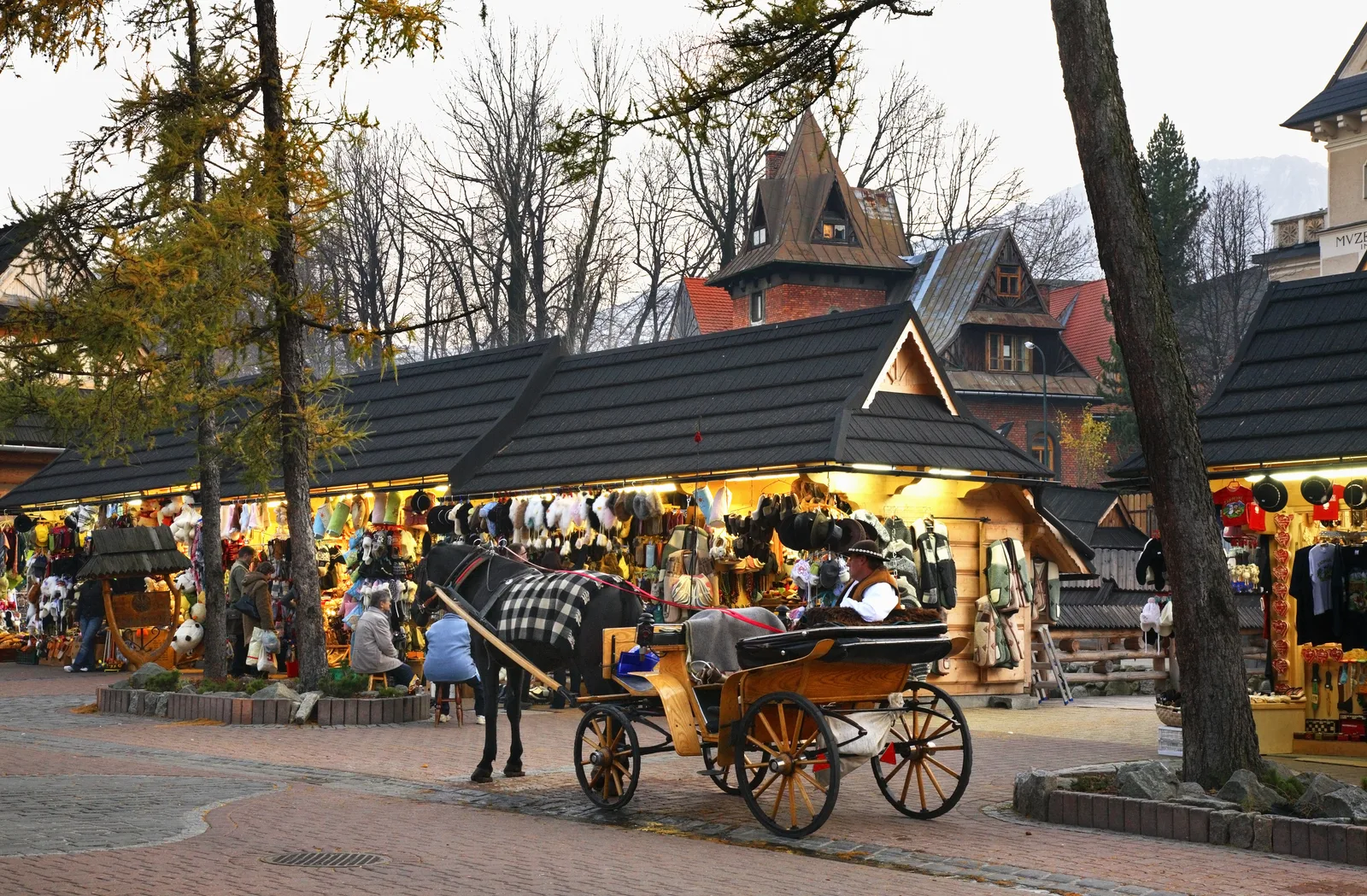
- Krupówki in the evening is more bearable than in the afternoon, and a walk through Zakopane after eight has a quite different feel.
- In the heat you appreciate the garden, the river and the shade. That is an argument for simply staying put on some days.
Autumn: the most underrated season
September and October are our private favourite. The air turns clear, so visibility in the mountains is the best of the year, the forest changes colour, and the morning mist settles in the valleys below the ridges.
Zakopane comes back to a human scale then: fewer people, easier parking, calmer restaurants. Room rates across the area are lower than at the height of the season, and the trails are still fully open, until the first snow higher up.
You just have to remember that the day is noticeably shorter. Walks are planned for earlier in the morning, and a head torch in the pack stops being an affectation.
Winter: skiing, thermal baths and the town in the evening
In winter the balance reverses. The Witów-Ski slope runs right beside us, so mornings go on skis without driving anywhere, and Zakopane gets visited in the afternoon and evening, once the crowd from the lifts has dispersed.
The floor of the Chochołowska Valley becomes a cross-country route and a destination for sleigh rides, and the Chochołowskie Thermal Baths are a few minutes away by car. In Zakopane itself the winter classics are Krupówki after dark, the museums, and the ski-jumping competitions on Wielka Krokiew, if they happen to fall during your stay.
New Year and the winter school break are the busiest dates of the whole year. If you are planning to come then, book well in advance — our rooms for three and four go first.
A short calendar of the year
| Season | What to come for |
|---|---|
| March–April | crocuses in the Chochołowska Valley, museums, an empty town |
| May–June | greenery, long days, trails without the summer crowd |
| July–August | peak season, every trail and lift running, the heaviest traffic |
| September–October | the best visibility, colour, lower prices |
| November | quiet and mist, a good time for the thermal baths and for resting |
| December–February | skiing, sleigh rides, thermal baths, Zakopane in the evening |
Why from Witów rather than from the centre
Staying in Zakopane gets you close to Krupówki, and that is all. You pay for it in noise, in parking charges, and in the fact that any trip into the mountains starts by queuing along with the whole town.
From Witów it is the other way round: the Western Tatra valleys start practically at the gate, the ski slope is next door, the thermal baths a few minutes further, and Zakopane stays within reach for when you actually want to go. In the evening you come back to the river rather than to the noise.
Źródła
Last updated: . Walking times, opening hours and prices are given as a guide. Check the current details and conditions before you set off.
More in this category
SightseeingAuthor
The Rezydencja Kojsówka team
Hosts of the house in Witów
We run Rezydencja Kojsówka in Witów, at the mouth of the Chochołowska Valley. The posts on this blog come from what guests ask us over breakfast, filled out with information from walking maps and from Tatra National Park material.