Oscypek, bundz and żyntyca straight from a shepherd's hut in Witów
Cheese sold by the roadside all year round is very rarely oscypek. The real thing is made for only half the year — and a few minutes from us you can watch it happen.
The Rezydencja Kojsówka team · · 7 min read
In brief
- The shepherd's hut at Polana Biały Potok is in Witów at Witów 314a, between the Kościeliska and Chochołowska valleys.
- The cheese is made seasonally, from May to October. Out of season the sheep are not on the pastures and there simply is no fresh oscypek.
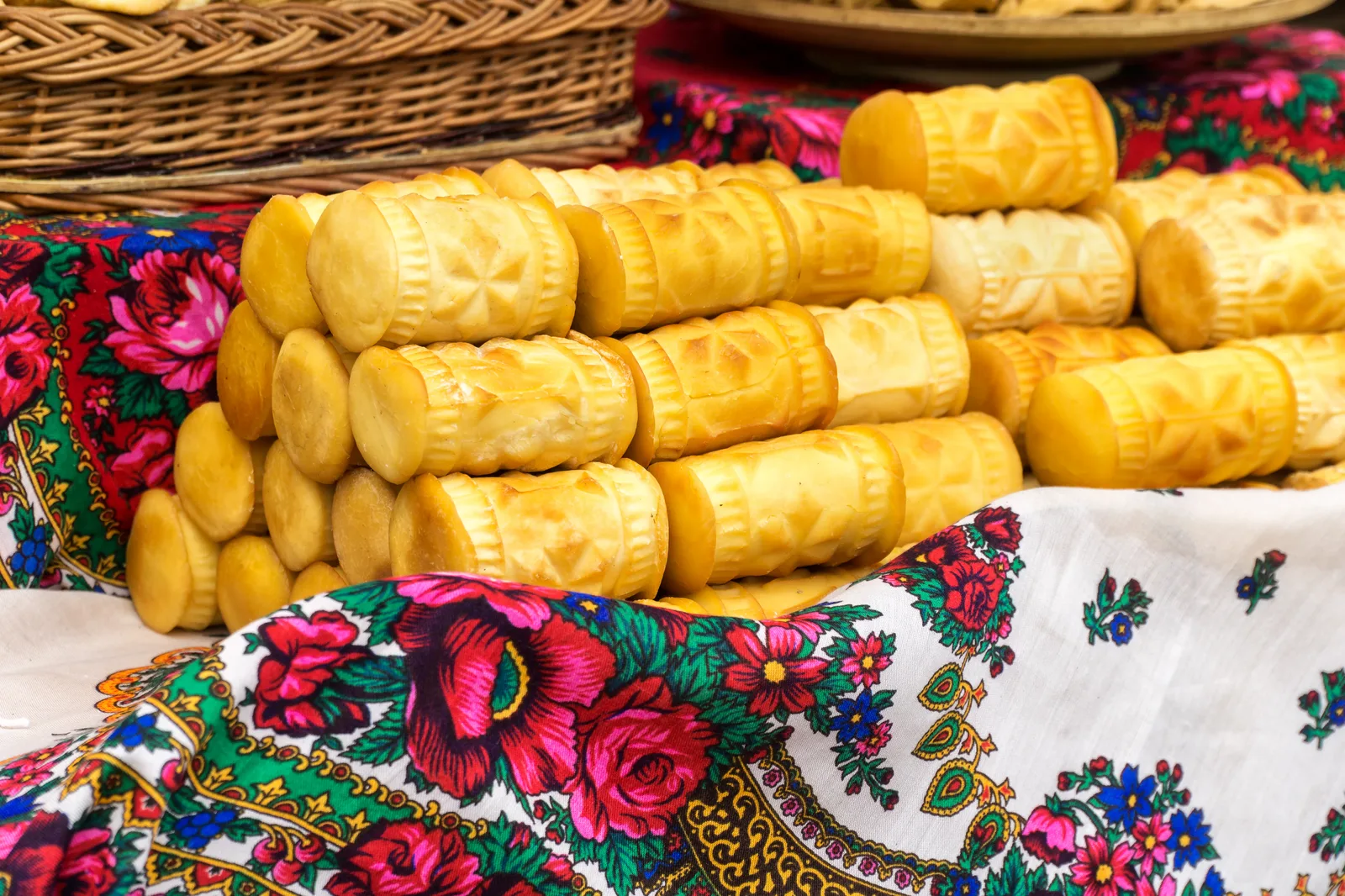
- Oscypek is a protected name: a smoked cheese made mostly from sheep's milk, spindle-shaped and stamped with a pattern.
- Bundz is fresh, unsalted sheep's cheese, and żyntyca is the whey left over from making it.
- Come early in the morning and you can watch the cheese being made and taste oscypek while it is still warm.
- The grilled cheese with cranberry sold along the trails all year round is usually gołka or a cow's-milk cheese, not oscypek.
A guest coming to Podhale for the first time usually wants to take home some oscypek. The trouble is that the cheese sold by the roadside and at the foot of the ski lifts all year round very rarely is oscypek — while the real thing is made for only six months of the year, a few minutes from Kojsówka.
We do not run the shepherd's hut and have nothing to do with it beyond being neighbours. We write about it because it is one of the places guests ask us about most often over breakfast, right after the trails.
The bacówka at Polana Biały Potok
The hut is in Witów at Witów 314a, on the Biały Potok clearing, exactly where the yellow trail into the Lejowa Valley begins. It sits between the mouths of the Kościeliska and Chochołowska valleys, so on the way to either of those trails it is practically next door.
On offer are oscypek, bundz in several versions (smoked, salted and marinated), bryndza, żyntyca, and also gołki, korbacze, plaited cheeses and small rounds. The list changes through the season, because some things are only made when there is enough milk for them.
The most interesting time is early morning. That is when the cheese is being made, and you can follow the whole way from milk to finished cheese while the baca — the head shepherd — explains what oscypek is made of and where its shape comes from. Cheese bought at that moment is still warm, and that is a taste no vacuum-packed supermarket version reproduces.
What the word oscypek actually means
Oscypek is a protected name in the European Union, as is bryndza podhalańska. That means not every smoked spindle-shaped cheese may be called one: what counts is a composition based mainly on sheep's milk, an area of production covering Podhale, and the method of making it.
The shape comes from a carved wooden mould that presses its pattern into the surface. The cheese then goes into brine, and finally under the roof of the hut, where it is smoked. That is where the colour and the smell come from — the things you recognise it by at once.
Bundz, bryndza and żyntyca
Bundz is fresh, unsalted sheep's cheese, the first stage before anything reaches the smokehouse. It is mild, faintly sweet and nothing like what most people associate with “highland cheese”. It is worth trying on its own, if only to understand where everything starts.
Bryndza is made from bundz that has been broken up, salted and matured for several weeks. It has the consistency of a paste and a distinctly sharper taste.
Żyntyca — also written żentyca — is the whey left after the bundz has been pressed. It is drunk warm, slightly sour and salty. For some people it is the best thing in the whole hut; for others it is a taste you try once in your life. There is no middle ground, which is exactly why it is worth trying.
The season: why only May to October
Cheesemaking is tied to grazing. The sheep go up to the pastures in spring, during the redyk — the ceremonial drive up the mountain — and come down in autumn, and only in that time is there milk to make anything from. The hut at Polana Biały Potok works to that rhythm, from May to October.
This has a direct bearing on planning a stay. If you come during the winter break or at Christmas, you will not buy fresh oscypek straight from the hut, because the season closed long before. The cheese available in winter comes from earlier batches or, far more often, is not oscypek at all.
| Product | What it is |
|---|---|
| Oscypek | Smoked cheese made mostly from sheep's milk, formed into a spindle; a protected name |
| Bundz | Fresh, unsalted sheep's cheese; the starting point for everything else |
| Bryndza | Bundz broken up, salted and matured for a few weeks, in the form of a paste |
| Żyntyca | The whey left after making bundz, drunk warm, slightly sour and salty |
| Gołka | A cow's-milk cheese of similar shape; this is what usually ends up on the grill |
How not to be taken in
The grilled cheese with cranberry sold on Krupówki street and below the lifts all year round is, in the vast majority of cases, not oscypek. It is gołka or another cow's-milk cheese — a perfectly good product in itself, just going by someone else's name. Ask the seller outright and they will usually confirm it.
- Buy in season, between May and October. Outside it there simply is no fresh oscypek.
- Buy from the shepherd or at the hut, not from a stall by the car park.
- Ask outright what milk the cheese is made from. “Cow's” does not disqualify the product, but it does rule out the name oscypek.
- Look at the pattern pressed into the cheese and at the smell of smoke. Both come from the real process, not from the packaging.
Honey, cranberry and the rest of the stall
Cheese is not the only thing worth taking home from Podhale. Nearby you will easily find honey from local apiaries — honeydew, multifloral and buckwheat are the most common — as well as preserves and syrups from fruit picked in the mountains: cranberry, bilberry, raspberry and rosehip.
Cranberry preserve is the natural companion to the cheese: its acidity cuts through the salty, smoky taste. It is the pairing everyone knows from grilled cheese, but with real oscypek, served cold and thinly sliced, it works better still.
Dried herbs and tea blends from plants gathered on the pastures work well too. They make a far better souvenir than a ciupaga walking axe with a slogan on it, and take up less room in the boot.
From Kojsówka to Biały Potok
Polana Biały Potok is a few minutes' drive from us, on the way towards the Kościeliska Valley. The easiest thing is to combine a visit to the hut with a walk into the Lejowa Valley, whose trail starts from that very clearing. It is one of the quietest places in the Polish Tatras.
You are welcome to eat the cheese you buy here in our garden, at the barbecue or by the fire. If you are planning an afternoon like that, mention it at breakfast and we will tell you what time to set off to catch the fresh batch.
Źródła
Last updated: . Walking times, opening hours and prices are given as a guide. Check the current details and conditions before you set off.
More in this category
FoodAuthor
The Rezydencja Kojsówka team
Hosts of the house in Witów
We run Rezydencja Kojsówka in Witów, at the mouth of the Chochołowska Valley. The posts on this blog come from what guests ask us over breakfast, filled out with information from walking maps and from Tatra National Park material.